Skip to content
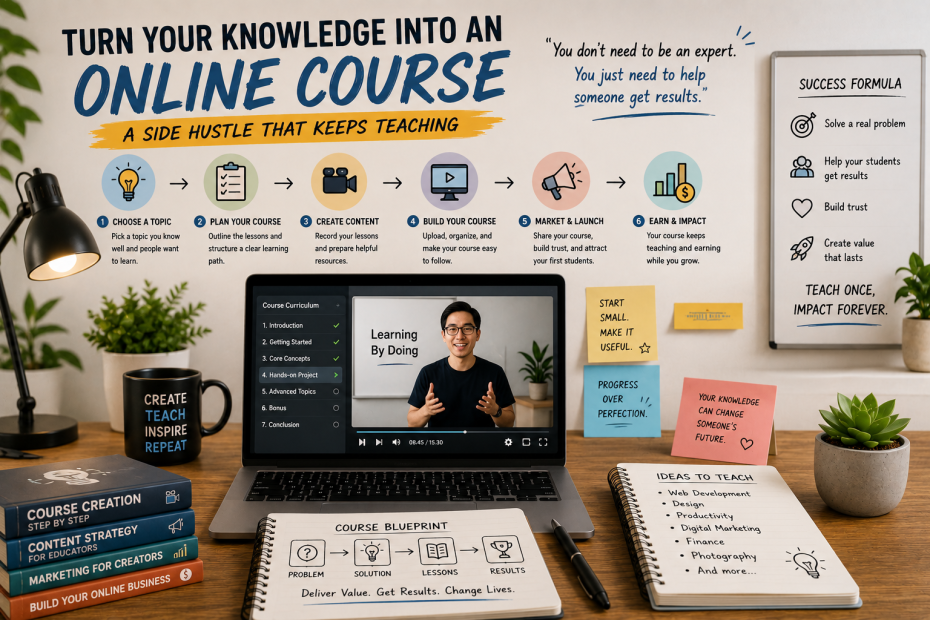
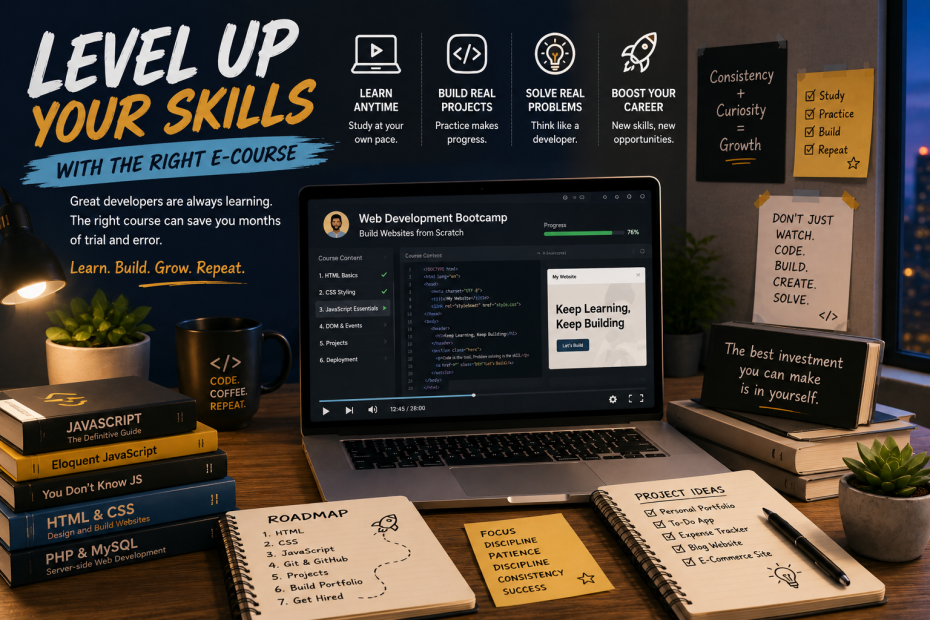
# Turn Your Knowledge Into an Online Course: A Side Hustle That Keeps Teaching Most people assume they need to become an expert before teaching anything online. They imagine university professors, bestselling authors, or industry veterans with decades of experience. While those people certainly create excellent courses, they aren't the only ones who have something valuable to teach. In reality, some of the most successful online courses solve surprisingly simple problems. They help beginners build their first website, organize their finances with spreadsheets, learn basic photography, edit videos faster, understand Excel formulas, design social media content, or finally make sense of programming without feeling overwhelmed. People don't always buy knowledge because it's advanced. They buy it because it's useful. That's what makes online courses one of the most interesting digital side hustles available today. ## What Makes Online Courses Different? Unlike freelancing, where you're paid for your time, an online course allows your knowledge to keep working long after you've finished recording it. Imagine answering the same question every week. Now imagine recording the answer once, organizing it into clear lessons, and allowing hundreds of students to learn from it whenever they're ready. That's essentially what an online course becomes. You're not just selling videos. You're packaging experience into a structured learning journey that helps someone reach a goal faster than they could on their own. ## You Don't Need to Teach Everything One of the biggest mistakes beginners make is trying to create the ultimate course covering every possible topic. The result is usually overwhelming for both the creator and the student. Instead, focus on solving one specific problem. Teach someone how to build their first landing page. How to edit videos with a particular software. How to organize tasks using Notion. How to create a portfolio website. How to understand HTML and CSS. The narrower your topic, the easier it becomes for the right audience to find you. People rarely search for "learn everything." They search for "how do I solve this problem?" ## Building a Great Course Starts With Structure A successful course isn't measured by the number of hours it contains. Longer doesn't automatically mean better. Students appreciate lessons that are clear, practical, and easy to follow. Begin with the fundamentals, gradually introduce more advanced concepts, and include small projects that allow learners to apply what they've just learned. Every completed lesson should leave students feeling a little more confident than they were before. Learning should feel like making progress, not collecting information. ## What Can You Teach? The possibilities are much broader than many people realize. Some creators build courses around web development, graphic design, programming, digital marketing, SEO, photography, video editing, artificial intelligence, copywriting, public speaking, productivity, language learning, finance, business, or music. Others focus on incredibly niche topics. Teaching people how to use a specific software. Creating printable planners. Building websites with WordPress. Designing presentations. Automating repetitive tasks. If you've solved a problem that other people are still struggling with, there's already a potential course waiting to be created. ## Recording Doesn't Have to Be Perfect Many aspiring instructors spend months buying expensive cameras, microphones, and lighting before recording their first lesson. Ironically, students usually care much more about clarity than cinematic production. Good audio. A clear screen recording. Organized explanations. Practical examples. Those things matter far more than owning the latest camera. Your first course doesn't need to look like a Hollywood production. It simply needs to help people achieve the result you promised. ## Marketing Is Part of Teaching Creating an excellent course is only half the journey. People first need to discover it. That's why successful course creators often publish helpful blog articles, YouTube tutorials, newsletters, social media content, or free resources that demonstrate their teaching style before asking anyone to buy a course. Every helpful piece of content builds trust. Every tutorial answers a question. Every visitor becomes a potential student. Teaching starts long before someone clicks the purchase button. ## A Course Can Keep Creating Value One of the most rewarding parts of building an online course isn't the sales notification. It's knowing that something you created continues helping people while you're already working on your next idea. A lesson recorded today might still help someone six months from now. A simple tutorial could become the reason someone lands their first freelance client, launches their first website, or discovers a career they never imagined possible. That's what makes online courses more than just another side hustle. They're a way of turning knowledge into something that keeps creating value, one student at a time.

Turn Your Knowledge Into an Online Course: A Side Hustle That Keeps Teaching

Most people assume they need to become an expert before teaching anything online. They imagine university professors, bestselling authors, or industry veterans with decades of experience. While those people certainly create excellent courses, they aren’t the only ones who have… 

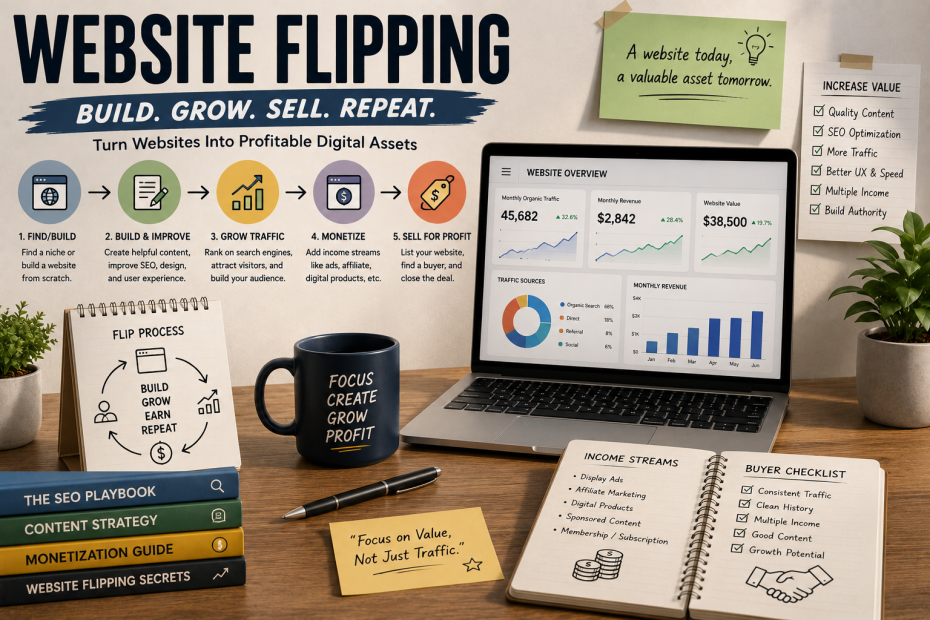
Website Flipping: Build, Grow, Sell, Repeat

Website Flipping: Build, Grow, Sell, Repeat

When most people hear the word investment, they immediately think about stocks, property, or cryptocurrency. Websites rarely make that list, even though thousands of websites are bought and sold every single year. Some change hands for a few hundred dollars,… 

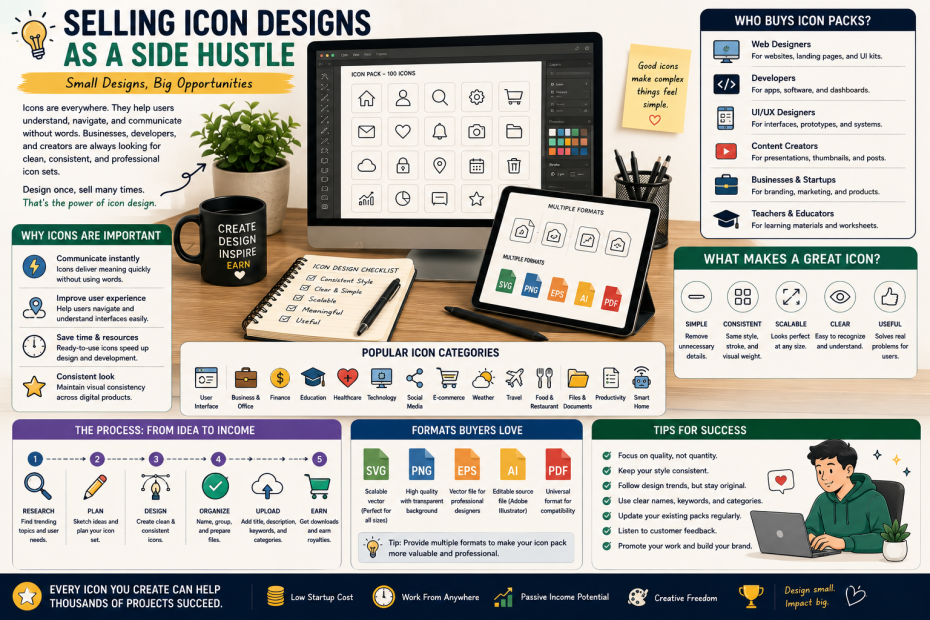
Selling Icon Designs as a Side Hustle: Small Designs, Big Opportunities

Selling Icon Designs as a Side Hustle: Small Designs, Big Opportunities

When people think about digital design, they usually imagine beautiful illustrations, detailed logos, or complex website layouts. Very few realize that one of the smallest design elements on a screen can also become a valuable digital product. Icons are everywhere.… 

Freelancing Tips for Beginners: Pros, Cons, and How to Prepare

Freelancing Tips for Beginners: Pros, Cons, and How to Prepare

If there’s one thing freelancing has taught me, it’s this: nobody sees the work behind the freedom. People often imagine freelancers working from cozy cafés, traveling whenever they want, setting their own schedules, and enjoying complete independence. Honestly, there are… 

Blogging as a Side Hustle: Build Once, Grow for Years

Blogging as a Side Hustle: Build Once, Grow for Years

When social media exploded, many people predicted the end of blogging. Short videos became the center of attention, scrolling replaced reading, and content seemed to get shorter every year. Yet, despite all those changes, blogs never disappeared. In fact, every… 

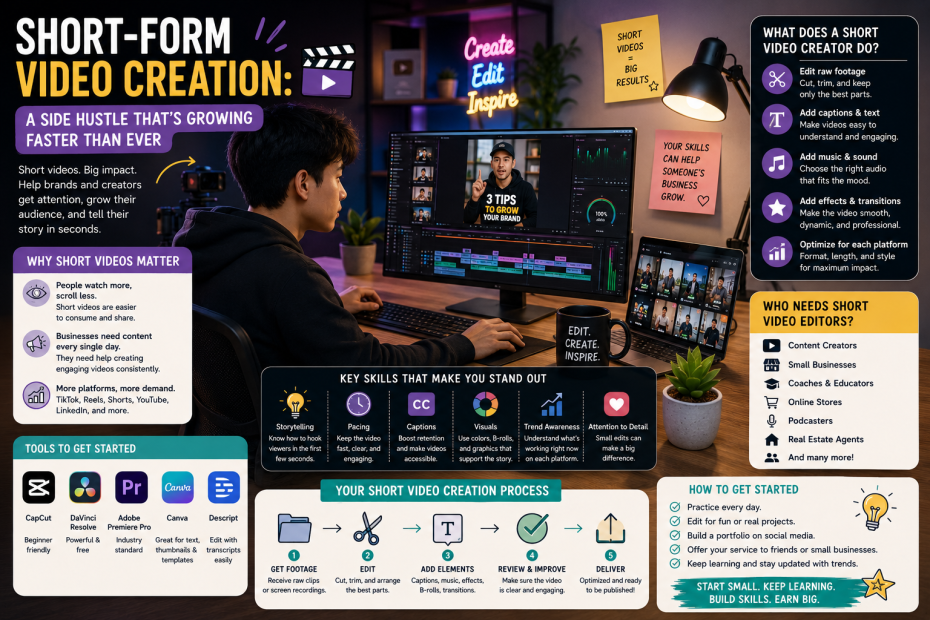
# Short-Form Video Creation: A Side Hustle That's Growing Faster Than Ever Not long ago, creating videos meant producing ten or twenty minutes of content. Today, the internet moves at a completely different pace. Open almost any social platform and you'll notice the same pattern. Videos are shorter, messages are clearer, and creators have only a few seconds to capture someone's attention before they scroll to the next post. That shift has quietly created one of the fastest-growing opportunities in the digital world. Businesses, educators, coaches, online stores, and content creators are publishing short-form videos every single day. The demand is growing so quickly that many of them simply don't have enough time to edit every video themselves. Instead, they hire people who can transform raw footage into engaging, professional content. That's where short-form video creation becomes more than just a creative hobby. It becomes a valuable digital service. ## Why Short Videos Matter People consume information differently than they did a few years ago. Instead of reading long posts or watching lengthy videos, many prefer quick content they can understand in less than a minute. Short videos fit naturally into that habit. They're easy to watch, easy to share, and often much easier to remember. For businesses, a single short video can introduce a product, answer a customer's question, explain a feature, or build trust with potential buyers. For creators, short-form content often becomes the first impression people have of their work. That's why companies continue investing in this format. Attention has become one of the most valuable resources on the internet. ## What Does a Short Video Creator Actually Do? A short video creator does much more than trim clips together. The job often includes selecting the strongest moments, removing unnecessary pauses, adding captions, choosing background music, creating smooth transitions, adjusting colors, improving audio, and making sure every second keeps the viewer interested. Sometimes the creator also writes hooks, designs thumbnails, or adapts one long video into several short clips for different social platforms. It's not just editing. It's storytelling in a much shorter format. ## Skills That Make You Stand Out The technical side of editing is important, but it's only part of the job. Understanding pacing, storytelling, audience behavior, and platform trends often matters even more. Knowing when to zoom in, when to cut, when to add captions, and when to let a scene breathe can completely change how people experience a video. The best editors don't simply make videos look good. They make people keep watching. ## The Tools Are Easier Than Ever One of the best things about this side hustle is that getting started doesn't require a professional studio. A computer. A reliable internet connection. Basic editing software. A willingness to practice. That's enough to begin. As your skills improve, you can experiment with more advanced tools, motion graphics, color grading, sound design, and AI-powered editing features. The technology continues evolving, but the goal stays the same: creating videos that people enjoy watching. ## Who Needs Short Video Editors? The list grows every year. Content creators. Small businesses. Online stores. Coaches. Teachers. Podcasters. Real estate agents. Restaurants. Fitness trainers. Software companies. Travel creators. Photographers. Even local businesses are discovering that short-form video often reaches more people than traditional advertising. That means opportunities exist almost everywhere. ## Building a Portfolio Is More Important Than Waiting for Clients One mistake many beginners make is waiting until someone hires them before creating examples of their work. A better approach is to start editing today. Take public videos, create practice projects, redesign existing content, or transform long interviews into engaging short clips. Every completed project becomes another example of your editing style and your ability to tell a story. Clients rarely ask how many tutorials you've watched. They want to see what you can create. ## Every Clip Is an Opportunity Short-form video isn't slowing down anytime soon. As more businesses invest in digital marketing and more creators compete for attention, the demand for skilled editors will continue growing. Every new platform feature, every content trend, and every business looking to connect with customers creates another opportunity for someone who understands how to communicate through video. The most successful editors aren't simply cutting footage together. They're helping ideas travel faster, stories become clearer, and businesses reach the people they're trying to serve. That's what makes short-form video creation more than just another side hustle. It's a creative skill that continues becoming more valuable every time someone presses play.

Short Video Creator: How to Start a Side Hustle Editing Short Videos

Not long ago, creating videos meant producing ten or twenty minutes of content. Today, the internet moves at a completely different pace. Open almost any social platform and you’ll notice the same pattern. Videos are shorter, messages are clearer, and…