Skip to content
How to Make $50 Freelancing in AI

How to Make $50 Freelancing in AI

AI freelancing covers any freelance service where artificial intelligence tools are used to complete client work faster or at a higher volume — writing, editing, design, research, chatbot setup, and more. For someone starting from zero, the first realistic milestone… 

How to Make $100 a Month With Print on Demand

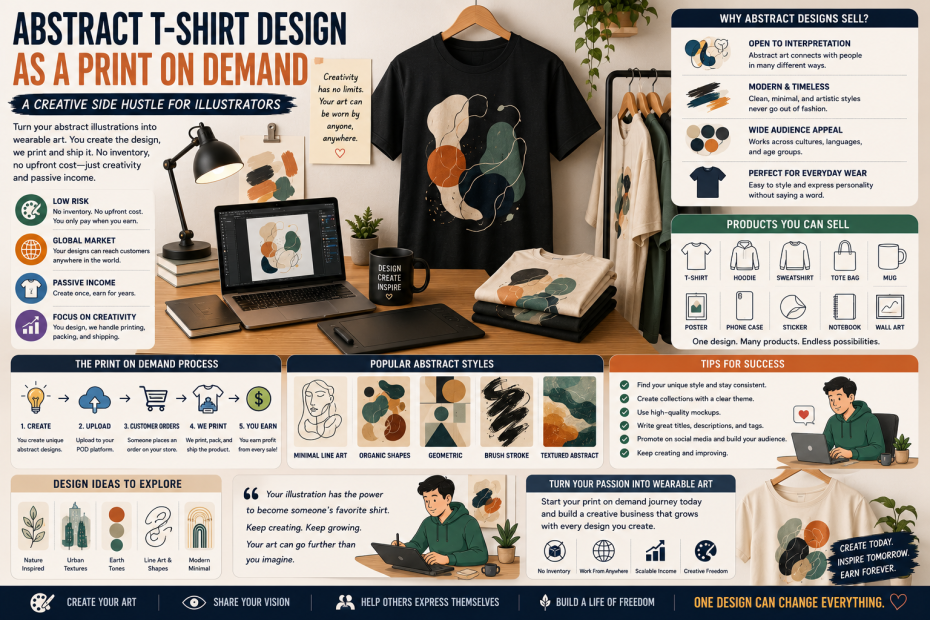
How to Make $100 a Month With Print on Demand

Print on demand (POD) lets anyone sell custom products — t-shirts, mugs, phone cases, wall art — without holding inventory or handling shipping. A design gets uploaded once, and a third-party supplier prints and ships the item only after a… 

How to Manage Your Time as a Freelancer Without Burning Out

How to Manage Your Time as a Freelancer Without Burning Out

One of the best things about freelancing is freedom. You can choose when to work. You don’t always have to wake up at the same time every morning. You don’t have a boss standing behind you. And technically, nobody is… 

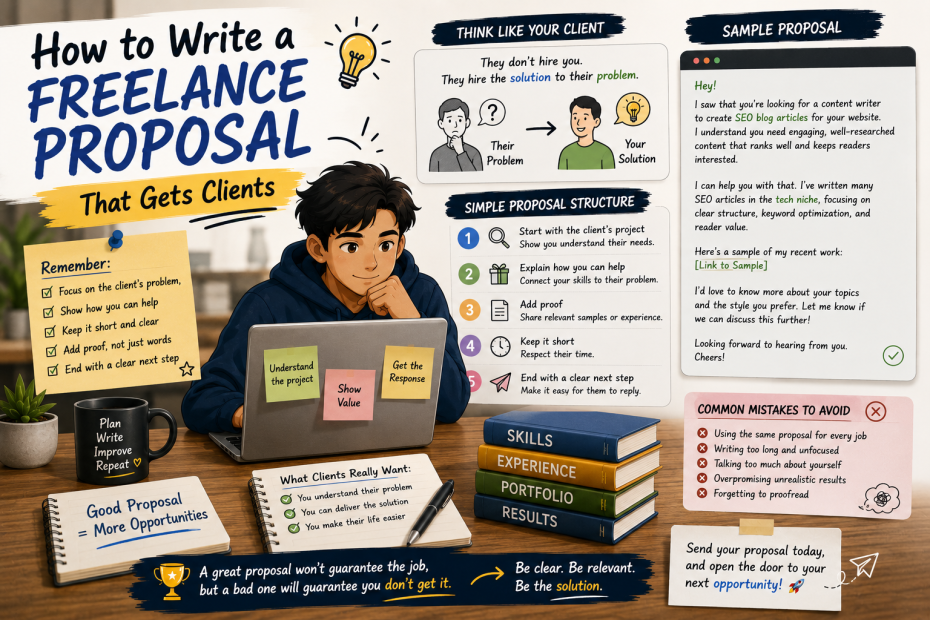
# How to Write a Freelance Proposal That Gets Clients So, you found a freelance job that looks perfect. The client needs exactly the kind of skill you offer. The budget looks decent. The project sounds interesting. And for a second, you're thinking: "Yep. This could be the one." Then you scroll down and see the part that makes a lot of freelancers suddenly stare at their screen for way too long. **Submit a proposal.** And now the panic begins. What should you say? How long should it be? Should you talk about your experience? Should you explain every single skill you have? Should you start with "Dear Sir or Madam"? Should you write a super long message so the client knows you're serious? Relax. A good freelance proposal doesn't need to be complicated. In fact, one of the biggest mistakes beginners make is trying way too hard to sound professional and accidentally creating something that sounds like it was written by a corporate robot. The goal is much simpler than that. You want the client to read your proposal and think: **"Okay, this person actually understands what I need."** That's it. And once you understand that, writing proposals becomes a whole lot easier. ## Read the Job Post Before You Start Writing Sounds obvious, right? You'd be surprised. A lot of freelancers see a job title, get excited, and immediately start sending the same proposal they've used twenty times before. Big mistake. Take a minute and actually read what the client wants. What problem are they trying to solve? What kind of result do they need? Are there any specific instructions? Do they mention deadlines, experience, style, or examples? Sometimes clients even hide a small instruction inside the job post just to see who actually read it. If the post says, "Start your proposal with the word banana," then yeah... Start with banana. 🍌 Not because the client is obsessed with fruit. They probably just want to filter out people who blindly copy and paste proposals everywhere. So before writing anything, understand the job. That already puts you ahead of a surprising number of people. ## Don't Make the Proposal All About You This is where many proposals go wrong. They start like this: "Hello, my name is John. I am a highly skilled professional with five years of experience. I am hardworking, motivated, passionate, creative, and dedicated..." And somewhere around sentence number twelve, the client has already stopped reading. The problem is simple. The client isn't mainly thinking about you. They're thinking about their problem. They need an article written. A video edited. A website fixed. A design created. So instead of starting with your entire life story, start by showing that you understand what they need. For example: "Hey, I saw that you're looking for someone to turn your long-form videos into short clips for social media. It sounds like the main goal is to create content that grabs attention quickly while keeping the important parts of the original video." Boom. Now the client knows you actually read the project. ## Keep It Simple and Human You don't need to sound like a lawyer writing a contract. And you definitely don't need to use every fancy word you can find. Write like a real person. Clear. Friendly. Professional enough. But still human. Something like: "Hey! I checked out your project, and I think I can help. I've worked on similar content before, and I can create short videos that are clean, engaging, and ready to post." Simple. Easy to understand. No unnecessary fluff. The client doesn't need a dictionary to understand your proposal. ## Explain How You Can Help After showing that you understand the project, explain what you can actually do. This is your moment to connect your skill with the client's problem. Don't just say: "I'm a great video editor." Okay. But how does that help the client? Try something more useful: "I can take your raw footage, identify the strongest moments, add captions and basic motion elements, and turn everything into short videos optimized for social media." Now we're talking. You're not just naming your skill. You're explaining the result. And clients usually care a lot about results. ## Show Something Relevant If you have a portfolio piece related to the project, this is a great time to mention it. But don't throw every single project you've ever made at them. Keep it relevant. If the client wants blog articles, show writing samples. If they need social media graphics, show designs. If they need video editing, show videos. Think of your portfolio like evidence. You're basically saying: "Don't just take my word for it. Here's what I can do." And honestly, that's much stronger than writing five paragraphs about how talented you are. ## Don't Write a Novel Here's another common mistake. Some freelancers think a longer proposal automatically looks more professional. So they write... And write... And write... Until the proposal is longer than the actual job description. Most clients don't have time for that. They might receive dozens of proposals. Make yours easy to scan. Get to the point. Show that you understand the job. Explain how you can help. Add something relevant. Then give them a clear next step. Done. You don't need to explain your entire freelance journey since the beginning of time. ## A Simple Freelance Proposal Structure If you're not sure where to start, here's a simple structure you can use: **1. Start with the client's project** Show that you understand what they need. **2. Explain how you can help** Connect your skills to their problem. **3. Add something relevant** Share a portfolio sample, experience, or a quick idea related to the project. **4. Keep it short** Respect the client's time. **5. End with a simple next step** Make it easy to continue the conversation. For example: "Hey, I saw you're looking for someone to write SEO articles for your technology website. I can help create articles that are easy to read while still being structured around relevant keywords and search intent. I've written similar content before, and I can share a few relevant samples with you. If you'd like, feel free to send me one of your topics, and we can talk about the style and direction you're looking for." That's it. Simple. Clear. Human. ## Don't Copy and Paste Everything Having a basic proposal template is fine. Actually, it can save you a lot of time. But don't use the exact same message for every project. Change the important parts. Mention the client's actual problem. Adjust your examples. Explain why your skill fits their specific project. Even a small amount of personalization can make your proposal feel completely different. Think of it this way. Would you rather receive a message that clearly responds to what you posted... Or one that looks like it was sent to 500 other people that morning? Exactly. ## Confidence Is Good. Overpromising Is Not. You want to sound confident. But don't promise things you can't actually deliver. Don't say: "I guarantee this will go viral." "I can double your sales in one week." "I can finish everything in three hours." Unless you can genuinely prove it. Overpromising might help you get a client's attention. But underdelivering can hurt your reputation. Be confident about what you can do. Be honest about what you can't. That's a much better strategy in the long run. ## Your Proposal Doesn't Have to Be Perfect This is important. Especially if you're new. You might spend thirty minutes trying to write the perfect opening sentence. Then rewrite it. Delete it. Write another version. Delete that too. Meanwhile, the job gets filled. Don't overthink it. Your proposal will improve over time. The first few might feel awkward. That's fine. Send them anyway. Pay attention to which proposals get replies. Look at what you could improve. Try different approaches. Freelancing involves a lot of experimenting. You won't magically know the perfect proposal formula from day one. You figure it out by actually sending proposals. ## The Goal Is to Start a Conversation At the end of the day, your proposal doesn't need to convince the client to hire you immediately. Its first job is simpler. Get their attention. Show that you understand the project. Give them a reason to check your profile or portfolio. And hopefully... Start a conversation. Once you're talking with the client, you have another chance to understand the project, explain your approach, and show why you're a good fit. So don't treat every proposal like it's a final exam. Think of it as knocking on the door. Your job is to make the client interested enough to open it. Keep it clear. Keep it relevant. Keep it human. And most importantly, actually send it. Because a slightly imperfect proposal that gets sent has a much better chance of landing a client than the "perfect" proposal that's still sitting in your drafts. And hey... You might be just one good proposal away from your next freelance project.

How to Write a Freelance Proposal That Gets Clients

So, you found a freelance job that looks perfect. The client needs exactly the kind of skill you offer. The budget looks decent. The project sounds interesting. And for a second, you’re thinking: “Yep. This could be the one.” Then… 

How to Set Your Freelance Rates Without Undervaluing Yourself

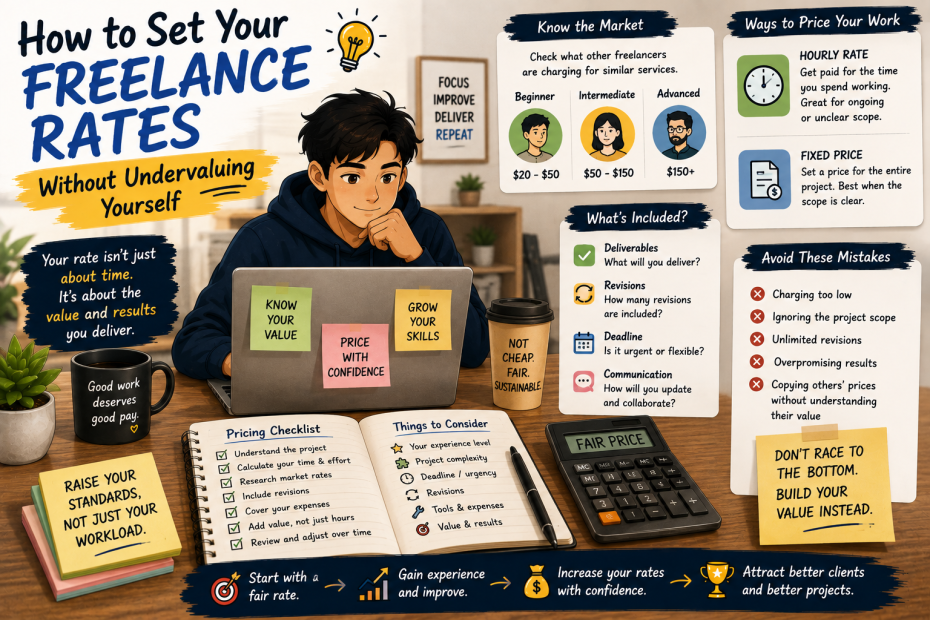
How to Set Your Freelance Rates Without Undervaluing Yourself

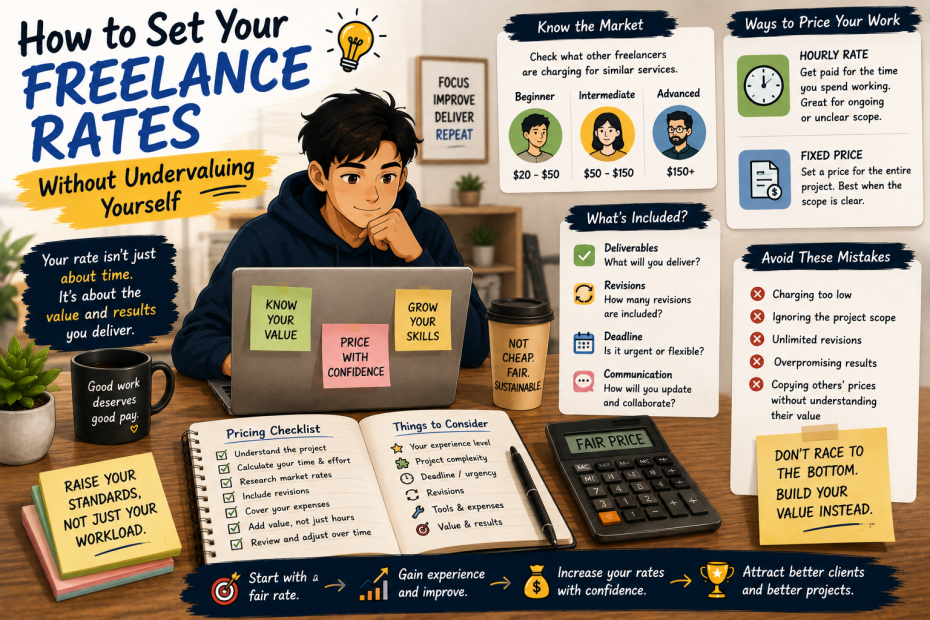
So, you’ve learned a skill. You’ve built a portfolio. Maybe you’ve even started sending proposals and talking to potential clients. Then suddenly, someone asks the question. “How much do you charge?” And just like that… Your brain stops working. You… 

How to Write a Freelance Proposal That Gets Clients

So, you found a freelance job that looks perfect. The client needs exactly the kind of skill you offer. The budget looks decent. The project sounds interesting. And for a second, you’re thinking: “Yep. This could be the one.” Then… 

How to Make $50 Freelancing in AI

How to Find Your First Freelance Client: A Beginner’s Guide

So, you’ve got a skill. You’ve spent some time learning it. You’ve created a few portfolio pieces. Maybe you’ve even set up your freelance profile. Everything looks pretty good. And then… Nothing happens. No messages. No clients. No exciting email…